Punjab Newsline | Chandigarh
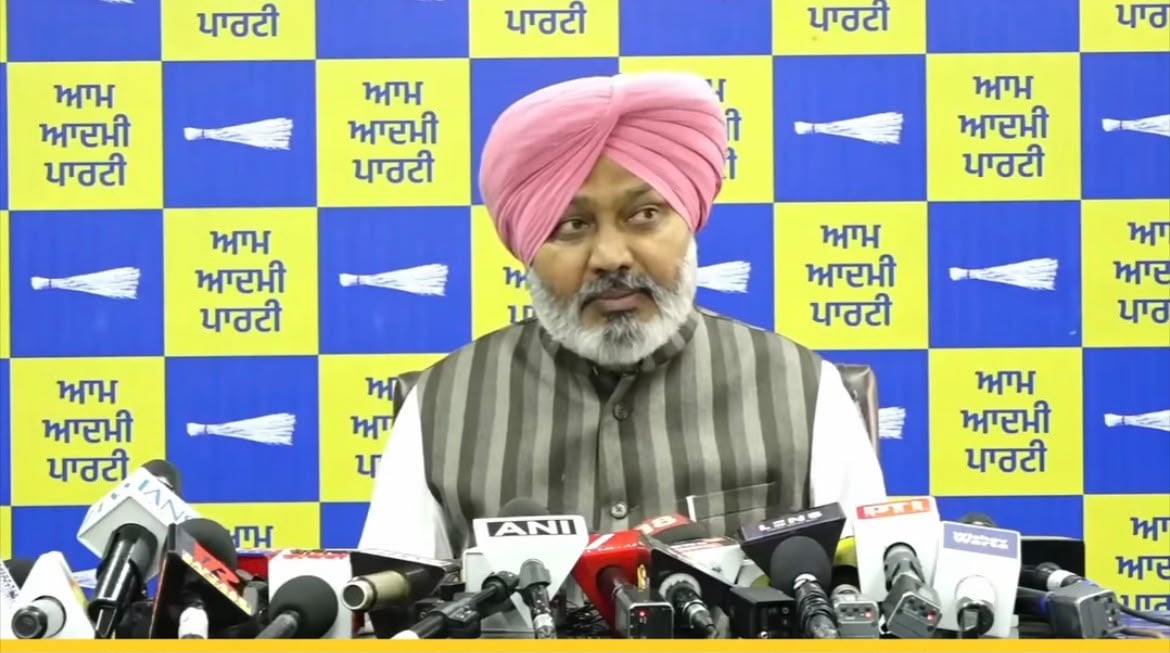
Aam Aadmi Party (AAP) Punjab Media In-charge Baltej Pannu has strongly criticised Bharatiya Janata Party (BJP) leaders for allegedly targeting and defaming Punjab's farmers in the name of pollution. He accused the BJP of making baseless allegations against Punjab to divert attention from the deteriorating air quality in Delhi and its own administrative failures.
Pannu said BJP leaders in Delhi had started blaming Punjab for the city's pollution even before paddy harvesting had begun in the state. He alleged that the BJP was now coming up with new claims every day to cover up the pollution crisis and the "gas chamber-like" conditions in Delhi, particularly during the Diwali period.
Reacting to BJP leader Kapil Mishra's remarks, Pannu dismissed the claim that 1,200 people had suddenly resorted to stubble burning overnight, calling it completely baseless and absurd. He said that if Mishra had any evidence to support his allegations, he should seek answers from his own party colleague Manjinder Singh Sirsa, who had repeatedly blamed smoke from Punjab for Delhi's pollution.
Highlighting Punjab's efforts to curb stubble burning, Pannu claimed that the state had achieved a 90% reduction in farm fire incidents this year, following an 80% reduction last year. He said the figures were supported by the Centre's response, which is also part of the official parliamentary records.
Taking a dig at what he described as the BJP's anti-farmer approach, Pannu said the party had still not provided answers regarding the 750 farmers who allegedly lost their lives during the protest against the now-repealed farm laws at the Delhi borders.
He further alleged that BJP leaders were repeatedly making statements to malign Punjab's hardworking farmers instead of acknowledging the state's efforts to control stubble burning.
Pannu maintained that Punjab had made significant progress in curbing stubble burning and urged BJP leaders to stop making what he termed false allegations and focus on addressing Delhi's pollution crisis and their own administrative shortcomings.