Punjab Newsline | New Delhi
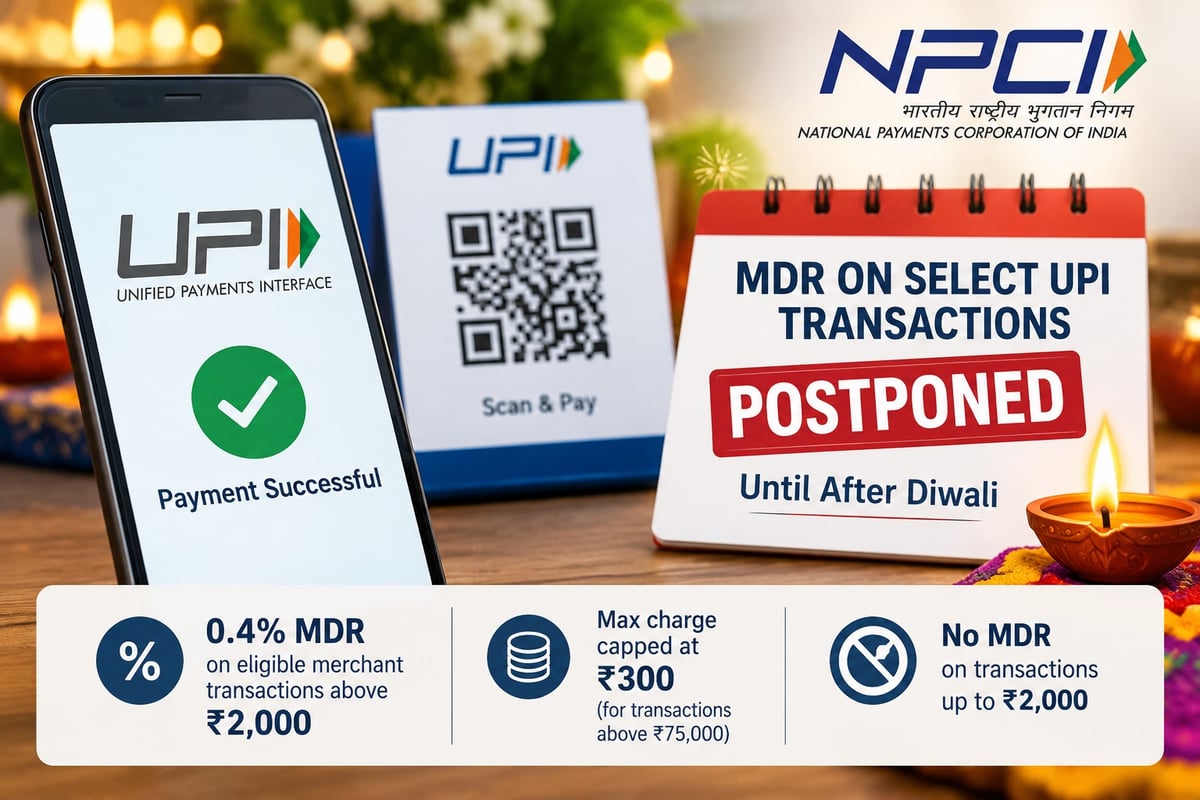
The National Payments Corporation of India (NPCI) has postponed the implementation of the Merchant Discount Rate (MDR) on select UPI merchant transactions until after Diwali, providing temporary relief to businesses during the festive season.
In an official statement issued on Tuesday, NPCI said the UPI and Services Steering Committee had decided to defer the implementation in view of the ongoing festive season. The revised fee structure will now come into effect immediately after Diwali, although the exact date will be announced separately.
The proposed MDR will not apply to all UPI payments. Instead, the charge will be levied only on eligible merchant transactions that fall under specified conditions.
What Is MDR and How Does It Work?
The Merchant Discount Rate (MDR) is a fee that merchants or businesses pay to banks and payment processors for accepting digital payments. The amount helps cover the costs incurred by various participants involved in processing transactions and maintaining the digital payment infrastructure.
The government and NPCI have clarified that MDR is neither a tax nor a fee collected by the government or NPCI.
How Much MDR Will Merchants Have to Pay?
Under the previously announced structure, an MDR of 0.4% will apply to eligible merchant UPI transactions exceeding ₹2,000.
However, the fee will be capped at ₹300 for transactions above ₹75,000. No MDR will be charged on transactions of ₹2,000 or less.
The proposed structure will apply only to merchant transactions covered by the specified rules. It will not affect every shopkeeper or every UPI payment.
What Does the Decision Mean for Customers?
The postponement means that the implementation of the proposed MDR on eligible merchant transactions has been delayed until after Diwali. The exact implementation date is yet to be announced.
Since the charge applies only to specified merchant transactions, ordinary UPI payments will not automatically attract MDR. The applicable rules will depend on the nature and value of the transaction and whether it falls within the designated category.