Punjab Newsline | New Delhi
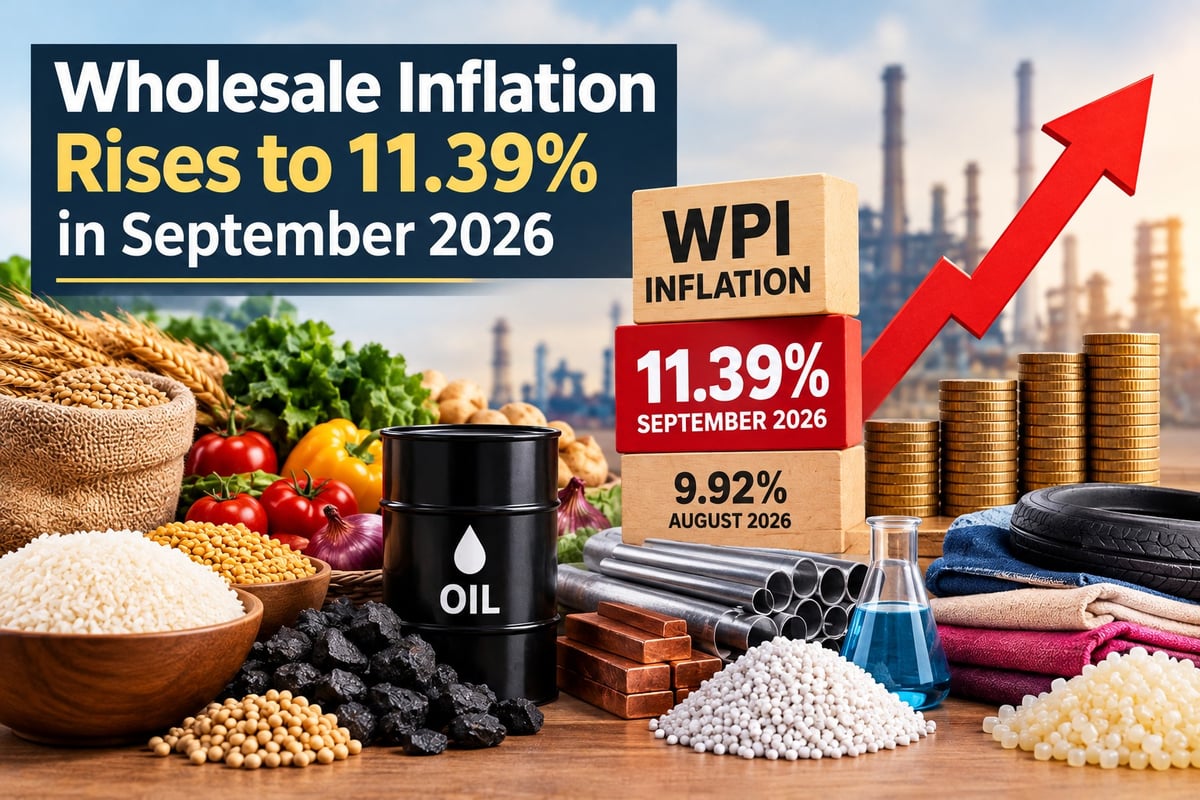
India’s wholesale inflation continued to rise in September 2026, with the Wholesale Price Index (WPI)-based inflation rate climbing to 11.39%, up from 9.92% in August. This marks an increase of 1.47 percentage points in a month.
According to data released by the government on Wednesday, rising prices of food items, fuel, electricity and manufactured goods were the major factors behind the increase. Wholesale inflation reflects changes in the prices of goods at the production and business levels.
Food Inflation Rises to 8.66%
Food inflation increased to 8.66% in September from 7.05% in August, contributing to the overall rise in wholesale inflation. However, the released data did not provide a detailed breakdown of price increases across individual food items.
West Asia Conflict Adds to Price Pressures
According to the Ministry of Commerce and Industry, the conflict in West Asia and the resulting blockade of the Strait of Hormuz pushed up global crude oil and fertiliser prices.
India imports a significant share of its crude oil through this strategic maritime route. Higher global prices have also affected the cost of food items and other commodities, contributing to the upward trend in wholesale inflation since the beginning of the current financial year.
Fuel, Electricity and Manufactured Goods See Sharp Rise
Inflation across several key sectors increased in September.
Fuel and electricity: Inflation rose to 25.85% in September from 22.93% in August.
Food items: Inflation increased to 8.66% from 7.05%.
Manufactured goods: Inflation in factory-produced goods reached a record 9.76%.
Mineral oils and crude petroleum: Higher prices of petroleum products, crude oil and natural gas contributed to inflationary pressures.
Metals and chemicals: Rising prices of basic metals and chemical products also pushed up wholesale inflation.
Textiles, rubber and plastics: Price increases in these sectors added to the overall rise.
Coal and electrical equipment: Coal, lignite and electrical equipment were among the other categories contributing to inflation.
Inflationary Pressure Remains a Concern
The sharp increase in wholesale inflation highlights mounting price pressures across several sectors of the economy. Higher fuel, energy and industrial input costs can increase production and transportation expenses, potentially affecting businesses and consumer prices.
The impact of these rising costs on retail inflation will depend on how much of the increase is passed on to consumers.