Punjab Newsline | Chandigarh
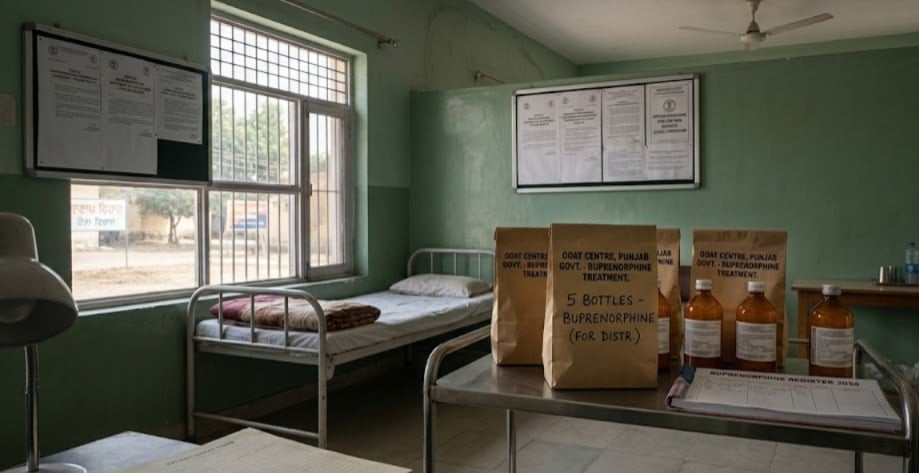
Punjab government’s anti-drug campaign, “War Against Drugs”, has come under fresh scrutiny following the release of the 129th Report of the Punjab Vidhan Sabha Government Business Committee. The report has revealed startling details about the large-scale procurement and use of Buprenorphine, a medicine used in opioid substitution therapy, across jails, government de-addiction centres and hospitals in the state.
While the state has been projecting an aggressive crackdown on narcotics, the committee has raised concerns that thousands of addicts may be developing dependence on the very medicine intended to help them quit heroin, smack and opium-based drugs.
Over 43 Crore Tablets Procured Since 2022
According to figures presented by the Punjab Health Systems Corporation (PHSC), procurement of 2 mg Buprenorphine tablets has increased steadily over the last five years.
Year Tablets Procured
2022 7 crore
2023 9.44 crore
2024 10 crore
2025 11 crore
2026 (till July) 6 crore
In total, more than 43 crore tablets have been purchased between 2022 and July 2026.
The report also noted that the number of registered patients in de-addiction programs has increased from around 2 lakh in 2022 to over 3.17 lakh in 2026, indicating a sharp rise in the demand for treatment services.
Committee Questions ‘Lifetime Medicine’ Argument
During the review meeting, PHSC officials reportedly argued that Buprenorphine works like a long-term maintenance medicine, similar to treatment for chronic illnesses such as diabetes, and may need to be continued for extended periods to prevent relapse into hard drugs.
The Assembly committee strongly objected to this explanation, observing that if patients are required to consume the tablets indefinitely, the policy risks replacing one dependency with another.
The panel remarked that even if a small percentage of patients remain dependent on Buprenorphine without achieving complete rehabilitation, it would defeat the broader objective of making Punjab drug-free.
Tablets Being Dissolved and Injected
One of the most alarming findings in the report is the alleged misuse of Buprenorphine tablets by some patients who dissolve the tablets in water and inject the solution into their veins using syringes.
The committee noted that such practices can lead to serious infections, organ damage, overdose complications and even death, and has sought stricter monitoring of dispensing and follow-up procedures at both government and private centres.
Illegal De-Addiction Centres Under Scanner
The report also highlighted the existence of unauthorised private de-addiction centres operating from residential buildings and private properties, particularly in Amritsar and other districts.
According to the committee, several such centres are allegedly functioning without valid licences, specialist doctors or mandatory certification, raising serious questions about how they are obtaining controlled medicines such as Buprenorphine.
Officials informed the committee that a new digital portal has been introduced and that a Certificate of Analysis has been made mandatory for licensed suppliers to improve traceability and prevent diversion of medicines into the black market.
Key Recommendations of the Assembly Committee
The panel has issued a series of recommendations aimed at tightening Punjab’s de-addiction framework:
Statewide investigation into all uncertified and illegal private de-addiction centres.
Formation of a joint medical and administrative task force to design a comprehensive rehabilitation policy.
Increase in hospital beds at high-burden centres such as Ludhiana Civil Hospital, where long waiting queues and overcrowding have been reported.
Greater focus on psychological counselling, behavioural therapy and rehabilitation, instead of relying primarily on medication-based treatment.
A Larger Public Health Challenge
Public health experts say the controversy highlights a broader challenge in opioid substitution therapy. Buprenorphine is widely used internationally to reduce withdrawal symptoms and prevent relapse, but its effectiveness depends on strict supervision, counselling support, rehabilitation services and carefully monitored treatment plans.
The committee’s findings suggest that Punjab may now need a deeper review of treatment outcomes, monitoring systems and rehabilitation support mechanisms as it continues its high-profile battle against drug abuse.
With illegal narcotics remaining a major social and political issue in Punjab, the report is expected to trigger further discussion in the Punjab Assembly on whether the current de-addiction strategy is delivering genuine recovery or merely replacing one dependency with another.