Punjab Newsline | Ahmedabad
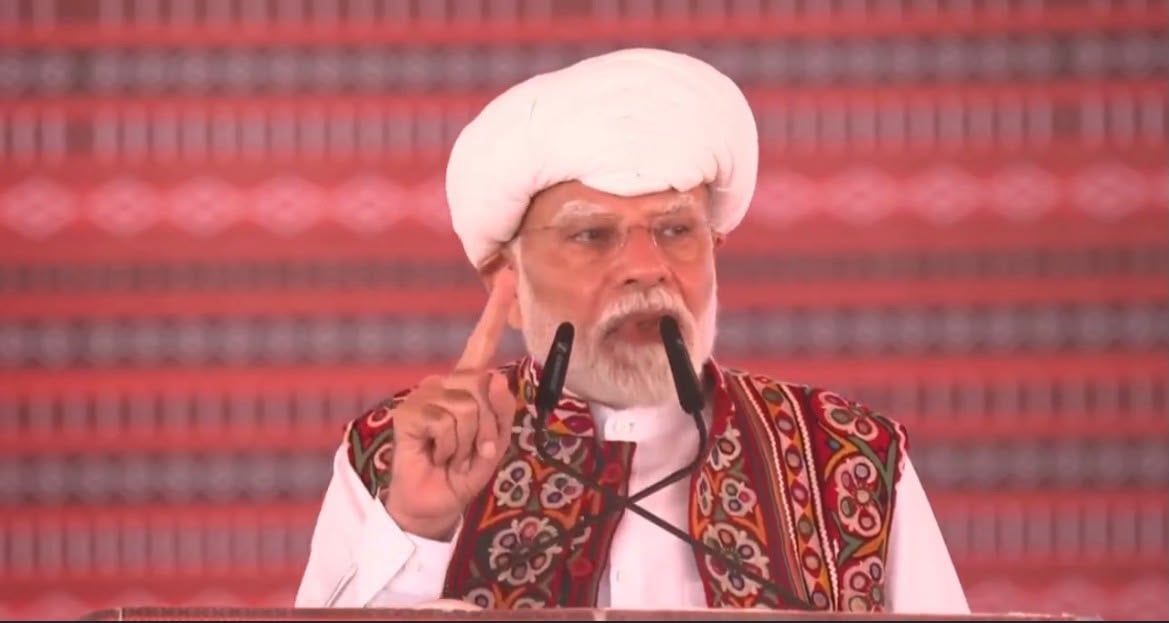
Prime Minister Narendra Modi on Friday released the 24th instalment of the Pradhan Mantri Kisan Samman Nidhi (PM-KISAN) scheme from Banaskantha in Gujarat. He also inaugurated and laid the foundation stones for development projects worth more than ₹14,000 crore and flagged off two new trains.
An unusual arrangement at the event caught the Prime Minister's attention, as charpoys (traditional village cots) were placed instead of chairs for farmers attending the gathering.
Addressing the gathering, Modi said it would be a matter of surprise for people across the country to see everyone sitting on charpoys at a public meeting. He praised the people of Banaskantha for keeping alive the country's traditional rural culture, adding that the arrangement could have even found a place in the Guinness Book of World Records.
Speaking about the dairy and livestock sector, the Prime Minister said the government wants to increase farmers' income through cattle dung as well. He highlighted plans to expand infrastructure for producing biogas, bio-CNG and organic fertilisers from cattle dung and agricultural waste. He also laid the foundation stones for two bio-CNG plants in the region.
Modi said protecting livestock from diseases remains a priority for the government. Under the free vaccination programme, nearly 150 crore vaccine doses have been administered to animals, benefiting the livestock of more than eight crore farmers.
He said the initiative had helped farmers save money and contributed to higher milk production. According to the Prime Minister, the average milk yield per cow or buffalo, which was less than five litres in 2013-14, has now increased to around eight litres. He also said India is the world's largest milk producer and is witnessing the fastest growth in milk production.
Highlighting the National Gokul Mission, Modi said the initiative aims to conserve and promote indigenous cattle breeds. A new research centre established in Banaskantha will strengthen the mission and focus on preserving breeds such as Murrah and Jaffarabadi. He described it as the first facility of its kind in the country.
The Prime Minister also underlined the importance of modern reproductive technologies, including in-vitro fertilisation (IVF), in improving cattle breeds. He said farmers with high-yielding and disease-resistant cows would benefit from technologies that help preserve these desirable qualities in future generations.
Modi further said climate change has emerged as a major challenge for farmers. He added that nearly 3,000 new varieties of seeds have been provided to farmers over the past few years to help them deal with changing weather conditions.
Emphasising the role of science and technology in agriculture and animal husbandry, he said better cattle breeds could significantly increase milk production. Timely vaccination and medical treatment would also reduce losses caused by livestock diseases.
"If the quality of livestock improves, milk production will increase. With timely vaccination and treatment, losses due to diseases can be reduced. Healthy animals will ultimately help increase the income of farmers and livestock owners," the Prime Minister said.