Punjab Newsline | Chandigarh
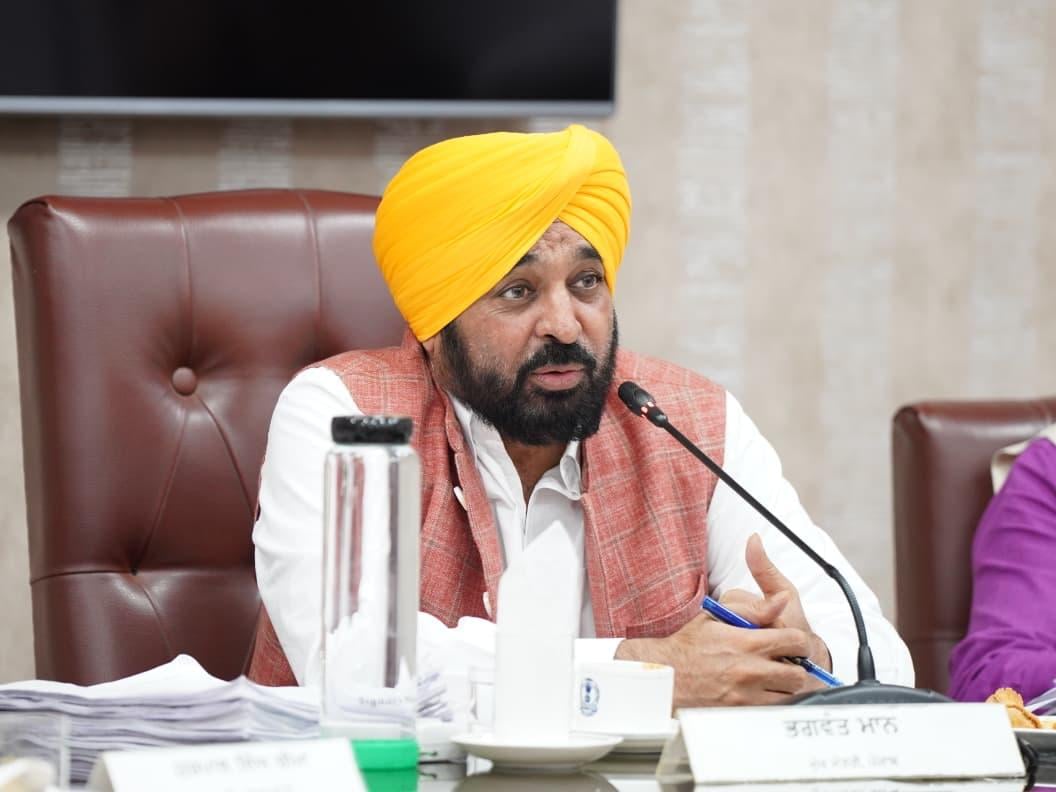
Punjab Cabinet, led by Chief Minister Bhagwant Singh Mann, on Wednesday approved a series of key decisions aimed at strengthening education, improving public administration, creating employment security, promoting digital higher education, and protecting the environment.
Fee hike bill approved
Cabinet cleared the Punjab Regulation of Fee of Un-Aided Educational Institutions (Amendment) Bill, 2026 to curb arbitrary and illegal fee hikes by private unaided educational institutions. The government said the move was necessary to protect students and parents from unnecessary financial burdens caused by unreasonable annual fee increases.
Relief for outsourced employees
Cabinet also approved the Punjab State Outsourced Transition to Contractual Engagement Bill, 2026. Under the proposal, eligible outsourced employees who have completed five years of continuous service, or three years in notified risk-prone categories, will be shifted to contractual engagement. Their wages will not be lower than the minimum wages prescribed under applicable laws.
Three digital universities get green signal
In a major push for digital education, the Cabinet approved the Punjab Private Digital Open Universities Policy, 2026 and allowed the establishment of:
Cloud University at Bohan, Hoshiarpur
M.S. Digital University at Fatehpur, Patiala
PhysicsWallah Digital University at Nandpur Kesho, Patiala
The government expects these institutions to expand access to quality higher education and support regional development.
New Tarsikka block approved
The Cabinet approved the creation of Tarsikka Block in Amritsar district by separating 64 gram panchayats from Jandiala Guru Block. Officials said the new block would help speed up development works in the affected villages.
Veterinary staff services extended
To ensure uninterrupted animal healthcare services, the government extended the services of 449 veterinary pharmacists and 451 sanitation workers working in 582 veterinary hospitals across Punjab for another year, from April 1, 2026, to March 31, 2027.
Tree protection bill cleared
Cabinet approved the Punjab Protection of Trees Bill, 2026 to strengthen environmental protection, maintain ecological balance, prevent pollution, and compensate for damage caused by tree felling. Punjab has also reaffirmed its target of increasing forest and tree cover to 7.5% by 2030.
GST and Panchayati Raj amendments
Cabinet further approved amendments to the Punjab GST Bill, 2026 to simplify compliance, reduce litigation, and provide greater flexibility for post-sale commercial discounts and export refunds.
It also approved amendments to the Punjab Panchayati Raj Act, 1994, under which the cadres of Panchayat Secretaries and Gram Sevaks (VDOs) will be merged into a new post called Panchayat Development Secretary to streamline rural administration.
Punjab government described the decisions as major governance and development reforms aimed at improving education, strengthening rural administration, supporting workers, expanding digital learning opportunities, and promoting sustainable environmental protection across the state.