Punjab Newsline | Chandigarh
Punjab schools are adopting a more experience-based approach to drug prevention, with students being exposed to the real-life stories of people who started using drugs, became dependent and later struggled to overcome addiction.
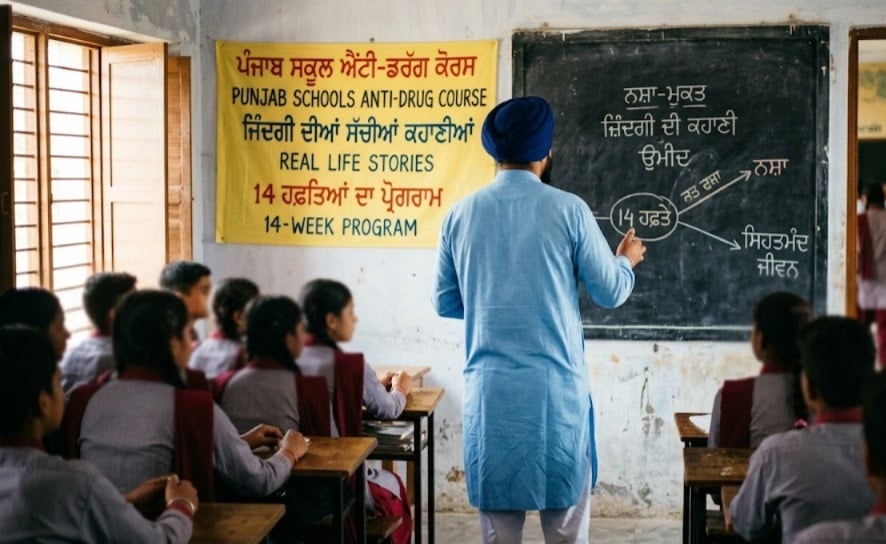
The Education Department has introduced a 14-week anti-drug curriculum for students of Classes 9 to 12, covering more than 7.5 lakh students across around 3,600 senior secondary schools in the state.
Developed in collaboration with partner organisations associated with J-PAL, the curriculum focuses on helping students understand how drug use can begin with small steps and gradually develop into dependence, affecting both personal and family life.
Real-life stories at the centre of lessons
The course includes eight documentary films featuring people who have experienced drug addiction. Through their stories, students are shown how drug use began, how it affected their relationships and daily lives, and the difficulties they encountered while trying to recover.
The idea is to help students understand the risks of drugs through first-hand experiences rather than relying only on textbooks, lectures or warnings from teachers.
The curriculum also features two expert videos—one aimed at students and another at parents. Experts explain how drug dependence can affect the brain and why overcoming addiction can require treatment and professional support rather than willpower alone.
Students’ understanding shows change
According to the Education Department, the program's initial results indicate a significant shift in students' understanding of addiction.
The proportion of students who understood that even trying “chitta” once can carry a serious risk of developing addiction increased from 60 per cent to more than 90 per cent, according to the department.
Similarly, around 80 per cent of students now believe that willpower alone is not enough to overcome drug addiction, compared with 46 per cent earlier.
Focus on peer pressure
Dealing with peer pressure is another important component of the 14-week program. Students are being taught practical ways to respond when friends or peers encourage them to use drugs.
The lessons include strategies such as politely refusing, explaining their reasons, walking away from the situation, changing the subject, using humour and preparing a response beforehand.
Parents also part of the program
The initiative also involves parents through workshops designed to help them recognise possible changes in their children's behaviour and health.
Parents are being advised to remain alert to signs such as red eyes, needle marks on the body and excessive fatigue. The program also stresses the importance of maintaining regular communication with children so that concerns can be identified and addressed early.
Through documentaries, expert guidance, classroom discussions and parental participation, the Education Department aims to make anti-drug education more practical and relatable for adolescents across Punjab.