Punjab Newsline | New Delhi
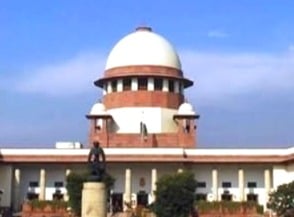
Supreme Court on Friday heard a suo motu case concerning rising air pollution in Delhi-NCR, observing that stubble burning is not the only contributor to the worsening air quality. The court also raised questions about pollution caused by private vehicles, particularly those owned by affluent sections of society.
A Bench headed by Chief Justice of India (CJI) Surya Kant, comprising Justices Joymalya Bagchi and V. Mohana, discussed several factors contributing to pollution, including farm fires, vehicular emissions and the lack of adequate facilities for farmers to manage crop residue.
During the hearing, CJI Surya Kant remarked in a lighter vein, "We hope all of you are enjoying the weather in Delhi." Responding to this, senior advocate Aparajita Singh, appearing as amicus curiae, said pollution levels remained close to the severe category and were affecting people's daily lives. She compared exposure to polluted air to smoking 30 cigarettes a day.
Singh said recent rainfall had brought some relief to Delhi's air quality. Referring to data from November 5, she pointed out that stubble burning contributed 14 per cent to the city's pollution on that day. She added that Delhi was already dealing with pollution from local sources, while farm fires further aggravated the situation.
Identifying transportation as one of the biggest pollution sources in Delhi-NCR, she also highlighted emissions from energy consumption and waste burning as major concerns.
CJI observed that this is the period when farmers prepare their fields for the next crop and stressed that stubble burning should stop. However, Singh argued that merely providing machinery to farmers would not resolve the problem. She explained that many farmers cannot afford the fuel required to operate the machines and that using such equipment in smaller fields is also difficult.
Justice Joymalya Bagchi referred to a proposal under which authorities had considered purchasing stubble from farmers at a fixed rate. He also questioned what steps were being taken to address pollution caused by private vehicles owned by affluent sections of society.
The court's observations highlighted the need for a comprehensive approach to tackling Delhi-NCR's pollution crisis, with attention not only to stubble burning but also to vehicular emissions, waste burning and other local sources of pollution.