Punjab Newsline | Business
A dining table is one of the most frequently used pieces of furniture in a home, serving as a space for everyday meals, family gatherings, and social occasions. As a result, the choice of dining table top material plays an important role in determining its durability, maintenance, and overall appearance. While wood and laminate remain popular options, modern engineered materials are increasingly considered for their durability in everyday use. Comparing different materials helps homeowners choose surfaces that balance aesthetics with long-term performance.
What Makes a Good Dining Table Top Material?
A dining table top is expected to withstand daily use while maintaining its appearance over time. Much like a high-traffic kitchen countertop, it must handle everything from hot serving dishes and accidental spills to scratches caused by cutlery and frequent cleaning while delivering both durability and visual appeal.
Some of the key characteristics include:
● Scratch resistance: The surface should resist marks caused by everyday dining and regular use.
● Stain resistance: It should prevent food, beverages, and sauces from leaving permanent stains.
● Heat resistance: Good heat tolerance helps protect the surface from hot serving bowls and cookware.
● Easy maintenance: Materials requiring minimal care simplify everyday cleaning.
● Durability: The tabletop should maintain its appearance despite frequent use.
● Design flexibility: A variety of colors, textures, and finishes allows the table to complement a range of interior styles.
These factors have encouraged homeowners to compare materials based on both appearance and long-term performance before making a purchase.
Comparing Popular Dining Table Top Materials
Dining table tops are available in a range of materials, each offering different advantages in durability, maintenance, and design. Understanding these differences helps identify the most suitable option for different lifestyles and interior spaces.
Stone
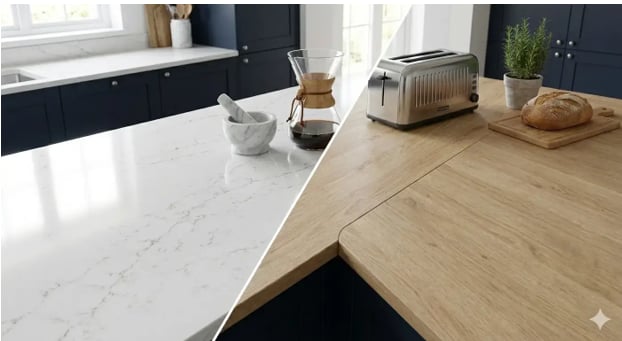
Natural stone table tops are valued for their timeless appearance and structural strength. Materials such as marble and granite create an elegant dining space while offering good durability. However, many natural stones are porous and require periodic sealing to protect against stains and moisture.
Wood
Wood remains a popular dining table material because of its natural warmth and classic appeal. It complements a wide range of interior styles and offers good structural strength. However, prolonged exposure to moisture and heat, along with regular use, may cause scratches, dents, or surface wear without proper maintenance.
Laminate
Laminate provides an affordable solution with numerous colours, textures, and wood-inspired finishes. It is relatively easy to maintain and suitable for everyday dining. However, prolonged heat exposure and edge damage may affect its appearance over time.
Sintered Surfaces
Sintered surfaces combine the appearance of natural minerals with enhanced durability for everyday use. Their non-porous surface offers excellent resistance to scratches, stains, heat, and moisture while requiring minimal maintenance. For example, brands such as Neotra Advanced Surfaces offer marble-inspired surfaces like Olympico Bianco, delivering the elegance of classic marble with the durability needed for modern dining tables.
Stone vs Wood vs Laminate: Which Material Performs Better?
Stone, wood, and laminate each offer unique benefits for dining tables, but their long-term performance depends on how well they withstand daily use. Comparing these materials across key factors helps determine which option best suits different households and lifestyles.
Feature
Stone
Wood
Laminate
Scratch resistance
Excellent
Moderate
Good
Stain resistance
Good
Moderate
Good
Heat resistance
Excellent
Moderate
Moderate
Moisture resistance
Good
Moderate
Good
Maintenance
Moderate
Moderate to High
Low
Long-term durability
Excellent
Good
Good
While each material has its advantages, engineered stone offers one of the most balanced combinations of durability, low maintenance, and visual appeal. Its resistance to scratches, stains, heat, and everyday wear makes it particularly suitable for regularly used dining tables.
Dining Table Top Designs for Different Spaces
The design of a dining table should complement the available space while meeting everyday dining needs. Selecting the right shape improves movement around the table and enhances the overall functionality of the dining area.
Rectangular Table Tops
Rectangular table tops are the most versatile option for medium and large dining spaces. They comfortably accommodate multiple people and work well in both formal dining rooms and open-plan layouts.
Round Table Tops
Round tables encourage conversation by allowing everyone to face each other equally. Their compact shape also makes them a practical choice for smaller dining spaces where easy movement is important.
Square Table Tops
Square table tops suit compact dining areas and smaller households. Their symmetrical design creates a balanced look while making efficient use of available floor space.
Oval Table Tops
Oval table tops combine the seating capacity of rectangular tables with softer edges that improve movement around the dining area. They are well suited to contemporary interiors seeking a refined, elegant appearance.
Choosing the right table shape is only part of the decision. The colour and finish of the tabletop also play an important role in defining the overall style of the dining space.
Colours and Finishes for Dining Table Tops
The colour and finish of a dining table top materials influence the overall look of the dining area while complementing surrounding furniture and décor. The right combination enhances visual appeal and helps the table maintain its appearance despite regular use.
● Marble-inspired finishes: Create an elegant, timeless look suitable for classic and contemporary interiors alike.
● Stone-inspired finishes: Add natural texture and depth while complementing a wide range of décor styles.
● Wood-inspired finishes: Bring warmth and character, making dining spaces feel more inviting.
● Matte finishes: Offer a refined appearance while minimising fingerprints and surface marks.
● Polished finishes: Reflect light to create a brighter, more sophisticated dining environment.
A carefully selected finish enhances the appearance of a dining table, but choosing the right material ultimately determines how well it performs over the years of everyday use.
Conclusion
Selecting the right dining table top material involves balancing aesthetics with durability and ease of maintenance. While stone, wood, and laminate each offer distinct advantages, engineered stone provides a practical combination of scratch, stain, and heat resistance, along with long-term performance. By comparing materials based on everyday requirements, homeowners can invest in dining tables that remain functional, visually appealing, and durable for years to come.