Punjab Newsline | Bogota
A powerful 7.4-magnitude earthquake struck Colombia on Monday night, leaving at least 132 people dead and 570 others injured, according to local authorities.
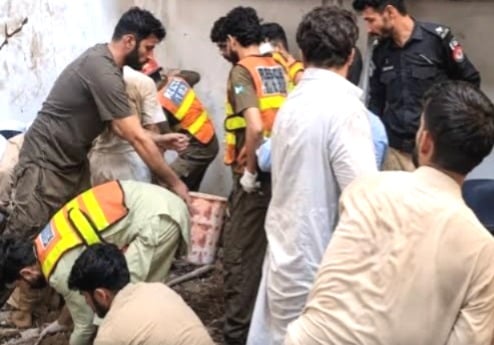
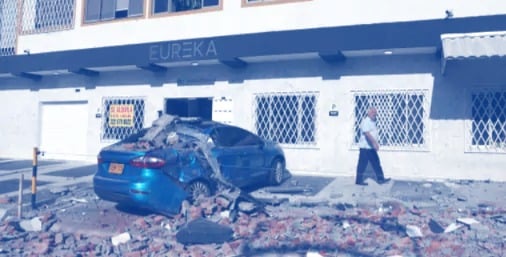
Officials said the earthquake caused extensive destruction across several regions. At least 86 buildings collapsed, while more than 1,500 homes were damaged. The disaster also affected 18 health centres and 52 schools, raising concerns about essential services in the impacted areas.
Authorities have suspended operations at seven airports, and a red alert has been issued in five cities. Colombian President Gustavo Petro convened an emergency committee meeting and has begun overseeing nationwide relief and rescue operations.

The city of Pereira suffered some of the worst losses, with around 60 fatalities reported. The city, which has a population of roughly 500,000, is located less than 64 kilometres from the earthquake’s epicentre.
Strong tremors were also felt in Bogotá and several other cities. Residents evacuated buildings and gathered on streets and open spaces as a precaution against possible aftershocks.
According to the United States Geological Survey (USGS), the earthquake occurred at approximately 7:34 a.m. local time. The epicentre was located near San José del Palmar in the Chocó region, at a depth of 107 kilometres.
The Mayor of Bogotá announced the establishment of six collection centres for affected communities. These centres are receiving water, blankets, packaged food, hygiene supplies and first-aid kits. The capital is also preparing to deploy 100 rescue workers to support emergency operations in the hardest-hit areas.
Why Colombia Experiences Frequent Earthquakes
Colombia is considered one of the world’s most earthquake-prone countries, experiencing more than a thousand earthquakes each year of varying intensity.
The main reason is its location within the Pacific “Ring of Fire,” a region known for intense seismic and volcanic activity. Several major tectonic plates — including the Nazca Plate, the Cocos Plate and the South American Plate — interact beneath the country.