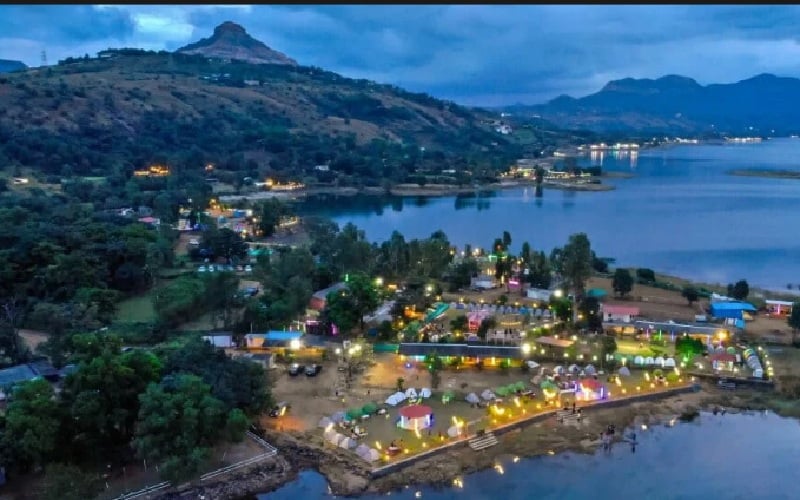
Ten years ago, a Saturday night at Pawna Lake meant a handful of tents, a few fishermen and almost no one else. Today the same shoreline hosts thousands of travellers every weekend, and the phrase "lakeside camping" in Maharashtra has become almost interchangeable with this one reservoir in Pune district. For anyone in Mumbai, Pune, Thane or Navi Mumbai looking for an overnight break that needs no flight, no leave application and no elaborate planning, Pawna has quietly become the default answer.
What exactly is Pawna Lake?
Pawna Lake, also written as Pawana Lake or Pavana Lake, is an artificial reservoir formed by the Pawna Dam on the Pawna river. It lies in Maval taluka of Pune district, close to Lonavala, roughly 58 kilometres from Pune city and around 110 kilometres from Mumbai. The dam was built for irrigation and drinking water, but its shoreline turned out to be one of the most photogenic stretches in the Sahyadri range.
Four hill forts frame the water. Tikona and Tung sit closest to the lake, with Lohagad and Visapur a short drive away. The sun sets behind Tikona, which is the single reason most photographers pick the western bank. A detailed explainer on the geography, history and access routes of Pawna Lake is worth reading before a first visit, because the lake is large and campsites on different banks offer very different experiences.
How camping took over the shoreline
Organised camping at Pawna started around 2015 and 2016. At that point there were barely five or six operators pitching tents near the water. Camping in Maharashtra until then was largely the preserve of trekking clubs and scout groups. Pawna changed that, mainly because it removed the two barriers that kept ordinary travellers away: distance and cost.
The lake is a two to three hour drive from either metro. A single night costs less than a mid range hotel room in Lonavala. That combination pulled in college groups first, then couples, then families, then corporate teams. There are now well over seventy campsites operating around the reservoir, and the busiest weekends of the year sell out weeks in advance.
What a night at a Pawna campsite actually looks like
Most operators run a broadly similar schedule, which helps first timers know what they are paying for.
• Check in is usually between 4 pm and 5 pm, deliberately timed so guests catch the sunset from the water's edge
• Tea and evening snacks follow, along with open ground games such as volleyball, badminton or cricket
• Sunset over Tikona Fort is the photography hour, and the reason for the early check in
• A barbecue and bonfire session starts after dark, generally between 7 pm and 8.30 pm
• Dinner is served buffet style, with vegetarian, non vegetarian and often Jain options
• Music, informal jamming and stargazing carry the night, with lights out varying by campsite policy
• Breakfast and tea follow the next morning, with check out around 10 am
The appeal is not luxury. It is the fact that the tent door opens directly onto still water, and that the Sahyadri ridgeline is the first thing you see in the morning.
Who goes to Pawna, and why
Couples make up a large share of weekend bookings. Anniversary trips, proposals and short romantic breaks are common enough that several operators now run couple specific packages with private tents and separate seating.
Families arrive in a different pattern, usually with children between six and fourteen, and usually on long weekends. For them the draw is a screen free night with games, a bonfire and safe open space.
College and corporate groups fill the remaining capacity. Team outings at Pawna have grown steadily because the format is simple to organise and the per head cost is predictable. Long running operators such as pawna lake camping have been hosting all four of these groups on the same shoreline since 2016, which is roughly as far back as organised camping at this lake goes.
Tents are no longer the only option
The steady growth in visitor numbers has produced a second category alongside traditional camping. Cottages, air conditioned rooms and permanent lakeside structures now sit next to the tent clusters, aimed at travellers who want the setting without sleeping on a mattress inside canvas. Parents travelling with very young children, older relatives and guests visiting in peak summer tend to prefer this format. Anyone comparing the two should look at what a Pawna Lake resort stay includes before booking, because inclusions such as meals, activities and lake access vary far more between resorts than they do between tents.
When to visit
October to March is the reliable window. Days are pleasant, nights are cool, and the water level stays high enough for good views. December and January are the busiest months of the year, and the 31st of December is effectively a separate season of its own, with dedicated New Year packages that open for booking months ahead.
The monsoon is a different proposition. The hills turn green, the light is dramatic, and in the early monsoon weeks the shoreline sees firefly activity that draws its own set of visitors. It is also the period where an experienced operator matters most, because the approach roads get slippery and campsite selection becomes a safety question rather than a preference.
What first timers usually get wrong
The last stretch of road to most campsites is unpaved. Vehicles with low ground clearance struggle, particularly after rain, and it is worth confirming the exact approach with the campsite before setting out.
Mobile network coverage is patchy on parts of the shoreline. Screenshots of booking confirmations and the campsite location pin are more useful than assuming data will work.
Swimming is not permitted. The reservoir has an uneven bed and varying depth, and reputable operators enforce this strictly.
Finally, the lake is only as good as the state visitors leave it in. Carrying waste back out, keeping music at a reasonable volume after midnight and respecting the surrounding farming villages are the things that will decide whether Pawna is still worth visiting ten years from now.
Frequently asked questions
How far is Pawna Lake from Pune and Mumbai?
Pawna Lake is approximately 58 kilometres from Pune, a drive of about 90 minutes, and approximately 110 kilometres from Mumbai, a drive of two and a half to three hours depending on expressway traffic.
What is the best time for camping at Pawna Lake?
October to March offers the most comfortable weather. December and January are peak months. Monsoon camping between June and September is possible but should only be booked with established operators.
Is Pawna Lake camping suitable for couples and families?
Yes. Most campsites run couple friendly packages with private tents, and family packages with child rates and supervised activities. Facilities including washrooms and changing areas are standard at established campsites.
Can you swim in Pawna Lake?
No. Swimming is prohibited at campsites around the reservoir because of uneven depth and submerged obstructions. Kayaking and boating are offered at some sites with life jackets.
How much does Pawna Lake camping cost?
Standard overnight packages typically fall in the range of one thousand to two thousand rupees per person, usually inclusive of tent stay, evening snacks, barbecue, dinner, bonfire and breakfast. New Year and festival dates are priced separately and higher.
Which forts can you visit from Pawna Lake?
Tikona, Tung, Lohagad and Visapur are all within easy reach. The Tikona trek from Tikona Peth village takes roughly an hour to ninety minutes and is rated easy to moderate.
AUTHOR BIO
This article has been contributed by the team at Pawna Lake Camps, one of the earliest organised camping operators on the Pawna Lake shoreline, running lakeside stays in Maval taluka, Pune district since 2016.