You might have a perfectly good cupboard in your bedroom, but somehow the clothes you need are always the hardest to find. There's a shirt you've been looking for since Monday, a watch you remember keeping somewhere safe, and that chair near the window which hasn't been used for sitting in months. It's become the usual place for clothes that are neither ready for washing nor ready to go back into the cupboard.
Most of us get used to these things and stop noticing them after a while. You know which drawer gets stuck, which cupboard shelf is always overcrowded and where you have to stand to get enough light near the mirror. It's only when you're getting ready in a hurry that all of it starts becoming a nuisance.
Arrange the Room Around Your Usual Day
Think about how you get ready on a weekday, especially when you've got somewhere to be. You might take your clothes out first, leave them on the bed, go looking for your watch and then come back because you've changed your mind about the shirt. If somebody else is using the cupboard at the same time, there's usually a bit of waiting involved too.
Now, say your cupboard is beside the door but the mirror is near the window. You take out a shirt, walk across to check it, decide against it and go back again. It's not the end of the world, obviously, but why make yourself do all that walking when the furniture could be arranged differently?
You could try shifting the mirror closer to the cupboard, or moving that little table which everyone keeps bumping into. Don't worry too much about making the room look perfectly balanced. If a particular arrangement makes your mornings easier, that's a good enough reason to keep it.
Sort Out the Cupboard Before Buying Another One
A cupboard can be quite deceptive. From outside, it looks big enough for two people's clothes. Open it, though, and you'll find the top shelf occupied by blankets, the bottom full of bags and the middle shelves carrying clothes that haven't been worn since the last family wedding.
Then there's the usual collection of things kept because they might be useful someday. Empty boxes, old handbags, shopping bags folded inside other shopping bags. Before you know it, the clothes you actually wear have very little room left.
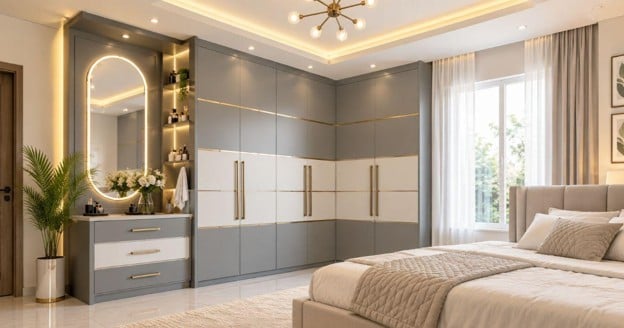
If you're thinking of getting a new Wardrobe, have a look at what takes up most of the space in your present cupboard. Perhaps you've got more folded clothes than anything else, in which case extra shelves would be useful. Or maybe you're tired of ironing the same shirts again because they've been squeezed into a pile. You'd probably prefer more hanging space. And when two people share one cupboard, separate sections can save quite a bit of rummaging through each other's things.
WoodenStreet has wardrobes with different internal arrangements, so don't stop at choosing the colour or door design. Check the shelves and hanging space properly. You might love how a cupboard looks, but if your long clothes won't hang comfortably inside it, that becomes a problem after you've brought it home.
Give All Those Small Things Somewhere to Go
It's funny how quickly little things take over a room. A perfume bottle on the bedside table, a pair of earrings near the mirror, hair clips inside a drawer with old receipts, and your moisturiser somewhere behind the books. None of these things takes up much room, but together they create quite a mess.

A Dressing Table is useful here, provided you're choosing one for the things you actually keep. You might only need a small mirror unit with one or two drawers. Somebody with plenty of jewellery, skincare products and hair accessories will probably want more storage. There's no reason both people should buy the same sort of table.
And you don't need to buy a whole set of organisers to arrange it. Small boxes can hold earrings, a tray can keep everyday products together, and things you rarely use can go into a drawer instead of sitting on the surface. It's quite nice when you can find your hairbrush without moving six other things first.
One thing I'd check before deciding where to place the table is the light. Stand in front of the mirror at the time you normally get ready. If your face is in shadow, the position probably isn't ideal. It's a small detail, but you'll notice it every morning.
Choose Furniture Colours Without Overthinking Everything
You see a bedroom photograph online and suddenly want that exact wooden finish. Then you visit a showroom, spot a lighter colour and start having second thoughts. Somebody at home suggests white because it'll look brighter, while someone else insists dark wood will be easier to maintain. By this point, choosing a cupboard has turned into a family discussion.
There's no need for the bed, cupboard and dressing unit to be identical. If you already have a wooden bed, you could pick a wardrobe in a related shade or go with something lighter. What matters is how the colours look together in your room, with your walls, curtains and flooring.
I'd also avoid deciding entirely from a photograph. A finish can look different under bright showroom lights compared with a bedroom that gets sunlight only for a couple of hours. If possible, look at the finish sample in natural light before making up your mind.
And do ask how it should be cleaned. Some surfaces show fingerprints more easily, while dust can be noticeable on certain dark finishes. These aren't exciting things to discuss while furniture shopping, but they matter once you're using the furniture every day.
Leave Some Room to Move Around
Sometimes we see an empty wall and immediately think something should go there. A small cabinet, perhaps, or another table. It fits, so why not? Then a few months later, there's furniture on every side of the room and barely enough space to pull out the wardrobe drawers.
This is quite common in bedrooms where storage has been added little by little. Every piece was bought for a reason, but nobody really looked at how all of it would work together.
Before adding another cabinet, check whether the things inside your existing furniture still need to be there. That drawer full of old cables and instruction manuals could probably be cleared. The wardrobe shelf holding bags you haven't used in years might be better for everyday clothes. You may find there's no need for another storage unit after all.
If you do need new furniture, measure the room with the doors and drawers open. It's easy to forget that a wardrobe needs space in front of it too. And leave enough room around the bed to change the sheets without struggling. You shouldn't have to move a stool and two baskets every time laundry day comes around.
Keep It Comfortable, Not Picture-Perfect
There's a difference between a room being tidy and a room being difficult to live in. You can clear every surface, hide everything inside cupboards and make the bedroom look lovely for a photograph. But if you're opening three drawers to find your watch the next morning, the arrangement hasn't really helped.
Maybe you like keeping a book beside the bed. Perhaps your everyday bag hangs behind the door because that's where you naturally reach for it. That's perfectly fine. Not everything needs to be hidden away just because you're organising the room.
And don't feel you have to replace all the furniture at once. Try rearranging the wardrobe first. See if the dressing area needs a better light or simply a little less clutter. Live with those changes for a few days before deciding what else is missing.
If you eventually decide to buy a wardrobe or dressing table from WoodenStreet, choose something that suits the way you use your bedroom rather than trying to recreate a room you've seen online.
After all, on most days you're not standing in the doorway admiring the furniture. You're looking for your clothes, getting ready, putting things away and trying to leave the house on time. It would be nice if the room made those ordinary jobs a little easier.