Punjab Newsline | Chandigarh
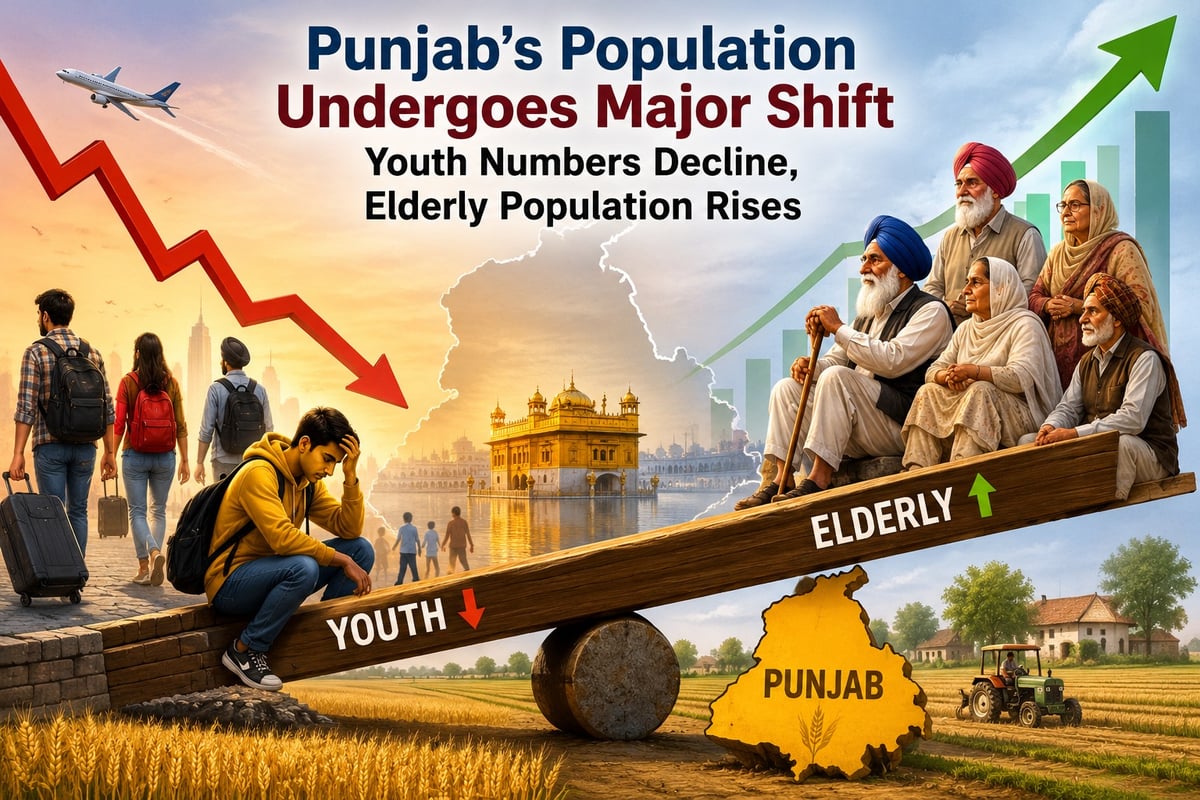
Punjab's population structure is undergoing a rapid transformation, with fewer children and young people and a steadily increasing elderly population, according to the latest Sample Registration System (SRS) report released by the Central Government.
The report reveals that children aged 0-14 years account for only 19.2 percent of Punjab's population, significantly lower than the national average of 24 percent. The state also trails its neighbouring states, with Haryana recording 24.4 percent and Himachal Pradesh 20.4 percent in the same age group.
The proportion of children aged 0-4 years in Punjab stands at just 6 percent, compared to the national average of 7.9 percent. The figure is 6.2 percent in rural areas and 5.7 percent in urban regions, indicating a continuing decline in birth rates.
Meanwhile, the working-age population (15-59 years) constitutes 69.3 percent of the state's population, higher than the national average of 66.4 percent. However, the share of people aged 60 years and above has reached 11.5 percent, surpassing the national average of 9.7 percent. Elderly residents account for 12.2 percent of the rural population and 10.7 percent of the urban population.
Experts attribute the shrinking youth population primarily to a sustained decline in birth rates. Punjab's birth rate has dropped from 15.7 during 2012-14 to 13.9 in 2022-24, well below the national average of 18.6. In comparison, Haryana's birth rate stands at 18.8, while Himachal Pradesh records 14.2.
The report also highlights concerns over large-scale migration, with an estimated 150,000 to 200,000 young people leaving Punjab for overseas destinations every year, many of whom do not return. Experts warn that the combination of an ageing population, falling birth rates, and youth migration could place additional pressure on healthcare services and create a shortage of skilled and productive workers in the coming years.