Punjab Newsline | New Delhi
Reserve Bank of India (RBI) is once again preparing to introduce polymer, or plastic, banknotes as the country faces rising cash demand, increasing currency printing costs, and the frequent replacement of worn-out paper notes. If successful, India could gradually join the growing list of countries using polymer currency.
Despite the rapid expansion of digital payments, the demand for cash continues to grow. According to a Business Standard report, the RBI is expected to announce a pilot project for polymer banknotes soon, marking its third major attempt in the past 16 years.
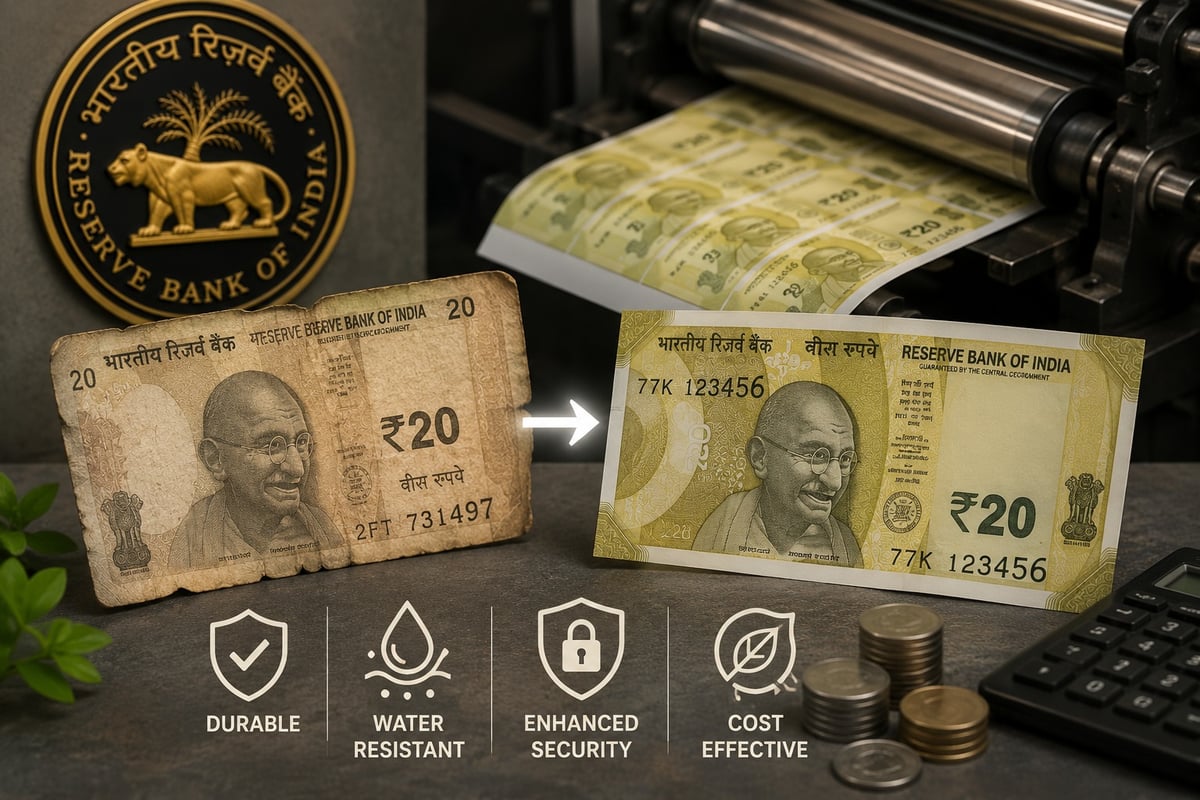
Initially, the pilot is likely to focus on lower-denomination ₹10 and ₹20 notes, as these are the most widely circulated and tend to wear out the fastest. A broader rollout will depend on the project's success and public feedback.
Unlike traditional cotton-based paper currency, polymer banknotes are made from a special plastic substrate. Although commonly referred to as "plastic notes," they are lightweight, flexible, and can be folded and handled just like conventional paper currency.
Polymer notes are significantly more durable, offering greater resistance to dirt, moisture, and tearing. They also support advanced security features such as transparent windows, micro-optic holograms, specialised security inks, and enhanced anti-counterfeiting technologies, making them much harder to forge.
The RBI's renewed interest in polymer currency comes amid sharply rising currency management costs. According to the central bank's Annual Report, banknote printing expenses increased to ₹6,372.8 crore in FY2024-25, up from ₹5,101.4 crore in the previous financial year. During the same period, nearly 23.8 billion soiled and damaged banknotes were withdrawn and destroyed, with ₹500 and ₹100 notes accounting for the largest share.
The central bank believes that introducing polymer notes, particularly in frequently used lower denominations, could significantly extend the lifespan of currency, reduce replacement costs, and strengthen protection against counterfeiting.