Punjab Newsline | New Delhi
In a landmark decision, the United Nations General Assembly has adopted a new world map projection, replacing the widely used Mercator projection that has dominated global mapping for nearly 457 years.
The resolution was approved on September 4, with 164 countries voting in favor of the new “Equal Earth” cartographic projection. The United States was the only country to vote against the proposal, while six nations abstained. India, France, the United Kingdom, and a majority of UN member states supported the move.
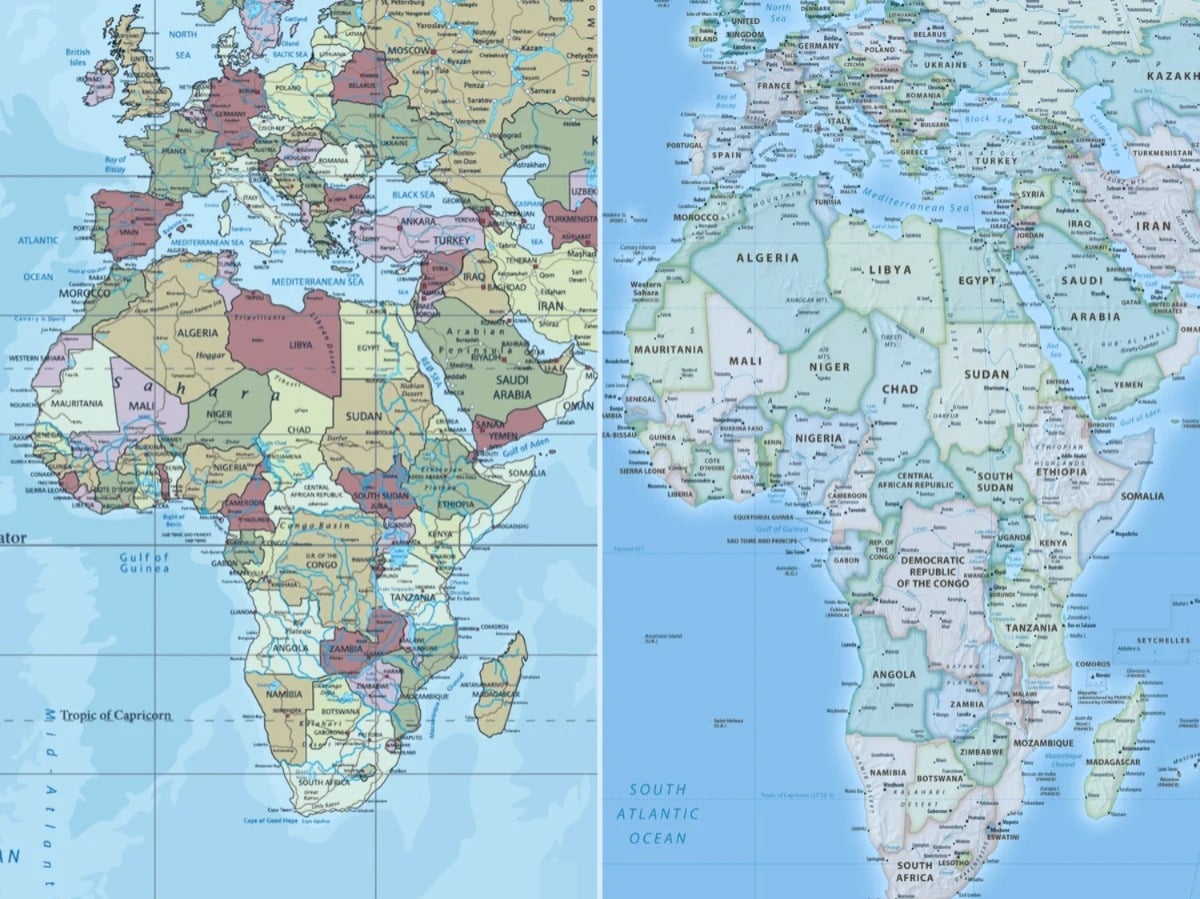
The new map is designed to provide a more accurate representation of the Earth's landmasses. Under the Equal Earth projection, continents such as Africa appear larger and closer to their actual size, while regions like North America and Europe are shown in more proportionate dimensions.
The proposal was introduced by Togo’s Foreign Minister Robert Dussey with the backing of members of the African Union (AU). Presenting the resolution, Dussey emphasized that maps influence education, public perception, and collective understanding of the world.
“Maps guide education, shape imagination, and influence collective thinking; therefore, they are never neutral,” Dussey said. He added that inaccurate representations of the planet can pass misinformation from one generation to the next.
The Mercator projection, created in 1569 by Flemish cartographer Gerardus Mercator, was originally designed to assist European explorers and sailors in navigation. While highly useful for plotting sea routes, it distorts the size of landmasses by enlarging regions near the poles and shrinking those closer to the equator.
Supporters of the new map argue that the Equal Earth projection corrects these distortions and offers a fairer depiction of continents and countries. The United Nations has now recommended that its agencies and publications use the Equal Earth projection instead of the Mercator map.
The decision is being viewed as a significant step toward improving geographical accuracy and reshaping how future generations understand the world.