Punjab Newsline | New Delhi
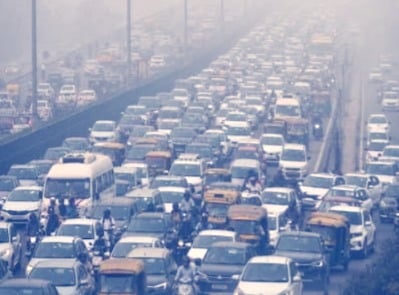
With air pollution worsening across the national capital region, a series of stringent restrictions is set to come into effect in Delhi from November 1, 2026, according to the proposed measures outlined for the winter pollution season.
The restrictions are expected to affect daily commuters, businesses, construction activities and residents travelling to Delhi from neighbouring cities, including Noida, Ghaziabad, Gurugram and Faridabad.
One of the major measures involves a ban on the entry of petrol and diesel vehicles registered outside Delhi that do not meet BS-VI emission standards. The restriction is stated to remain in force from November 1, 2026, to January 31, 2027. CNG and electric vehicles, along with vehicles used for emergency services, are exempted under the stated provisions.
The restriction could create difficulties for commuters travelling to Delhi for work and business in older vehicles. Authorities are expected to use Automatic Number Plate Recognition (ANPR) cameras at major entry points to identify vehicles that do not comply with the rules.
Valid PUC Certificate to Be Mandatory
From November 1, vehicle owners will also be required to produce a valid Pollution Under Control (PUC) certificate to obtain fuel at petrol pumps, as outlined in the proposed measures. Vehicles without an updated certificate could be denied petrol, diesel or CNG, potentially leading to longer queues at fuel stations and inconvenience for motorists.
Commuters have been advised to check the validity of their PUC certificates and renew them before the deadline to avoid last-minute difficulties.
Parking Charges Likely to Double
To discourage the use of private vehicles, parking charges at authorised parking facilities operated by agencies such as the Municipal Corporation of Delhi (MCD) are set to double under the stated plan. Metro parking facilities are exempted from the proposed increase.
The move could raise daily commuting costs for people who regularly drive to offices, commercial areas and markets across the capital.
Construction Activities to Face Restrictions
Open demolition and outdoor construction activities that generate dust are also set to face restrictions from November 1. The measure is aimed at reducing dust pollution, a significant contributor to poor air quality in Delhi-NCR.
The restrictions could affect real estate projects, builders and residents undertaking house construction or renovation. Daily-wage labourers, construction workers and businesses linked to the sector may also face disruptions if projects are suspended.
Staggered Office Timings, Work From Home
To ease traffic congestion and reduce vehicular emissions, separate office timings have been outlined for civic and Delhi government offices. MCD offices are scheduled to operate from 8.30 am to 5 pm, while Delhi government offices are set to function from 10 am to 6.30 pm.
A 50 per cent work-from-home arrangement has also been advised under the stated plan. The move could change the daily routines of government employees and encourage private companies to allow more employees to work remotely.
Commercial Transport and Markets May Be Affected
Restrictions on older commercial diesel vehicles and penalties of up to Rs 20,000 for violations are also expected to affect goods transportation. Markets such as Chandni Chowk and Sadar Bazaar could experience delays in the movement of goods if transport operators face difficulties entering the capital.
The restrictions may also affect delivery services and the supply of essential commodities, depending on enforcement and the availability of compliant vehicles.
With the winter pollution season approaching, the measures are intended to curb emissions and improve air quality. However, their implementation could create logistical and financial challenges for commuters, traders, construction workers and businesses across Delhi-NCR.
Note: The specific restrictions, dates, exemptions and penalties should be verified against official Delhi government and Commission for Air Quality Management (CAQM) orders before publication.