Punjab Newsline | Chandigarh
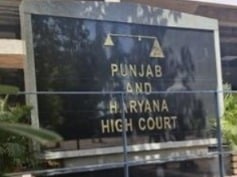
Punjab and Haryana High Court has held that a woman who entered into a second marriage while the first wife was still alive is not entitled to claim the family pension of a deceased government employee.
The court clarified that if the second marriage is invalid under the law, the woman cannot be recognized as the employee’s “widow” for pension purposes.
A division bench comprising Justices Ashwani Kumar Mishra and Rohit Kapoor dismissed an appeal filed by Priya, a resident of Mohali, observing that under the Central Civil Services (Pension) Rules, 1972, a second marriage is recognized only if it is legally valid. The bench stated that a marriage contracted during the subsistence of the first marriage is void and does not create any pension-related rights.
The dispute arose after the death of Major Hari Singh, when his first wife, Mohinder Kaur, and Priya contested retirement benefits and other service-related entitlements. Mohinder Kaur approached a civil court claiming to be the legally wedded wife and sought retirement benefits. The trial court ruled in her favour.
An appellate court later recognized Priya as the legal wife based on marriage-related evidence and a will. However, the Punjab and Haryana High Court overturned that decision and restored Mohinder Kaur’s status as the lawful wife. Priya subsequently challenged the ruling before the Supreme Court, but her appeal was dismissed in 2006.
Despite this, Priya later sought a share in the family pension, arguing that she should be treated as a co-widow under Rule 54(7) of the Central Civil Services (Pension) Rules.
Rejecting the plea, the High Court held that the provision for sharing family pension among multiple widows applies only when each marriage is legally valid. The court emphasized that the term “widow” in law refers only to the legally wedded wife of the deceased employee, and an invalid marriage cannot confer pension rights.