Punjab Newsline | New Delhi
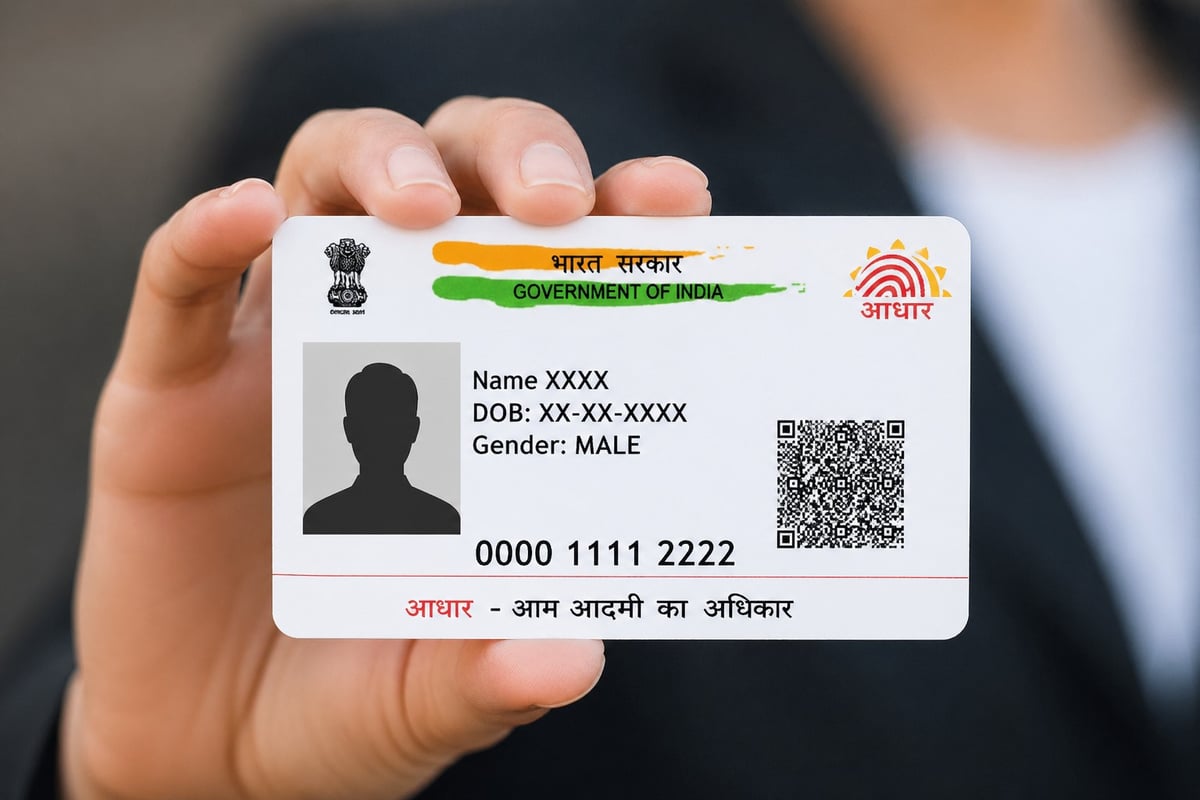
The Unique Identification Authority of India (UIDAI) has clarified that Aadhaar card serves as a valid proof of identity through authentication, but should not be considered as a proof of date of birth, even if it contains such information.
This clarification was issued in a letter sent to Aadhaar User Agencies (AUA) and e-KYC User Agencies (KUA). UIDAI emphasized that the primary purpose of Aadhaar is to establish identity, not to certify an individual’s date of birth.
According to the authority, the date of birth mentioned on the Aadhaar card is based on information provided by users during enrollment or updates. This information can be used alongside supporting documents such as birth certificates, school certificates, passports, or certificates issued by government authorities.
In cases where valid documents are not available, the date of birth may be recorded as declared or approximate. In such instances, the resident provides their age, and the system calculates the year of birth, defaulting the date to January 1 of that year. Therefore, Aadhaar cannot be treated as an official proof of date of birth.
UIDAI further stated that AUA and KUA agencies may decide whether Aadhaar can be used for purposes related to determining date of birth. It also noted that the use of Aadhaar for welfare schemes, subsidies, and other services is determined by central ministries, state governments, and other authorized bodies.
The authority reiterated that all forms of Aadhaar—including physical cards, e-Aadhaar, masked Aadhaar, offline XML, and QR code—are valid as proof of identity and address under specified conditions. However, it clearly underlined that Aadhaar alone is not a valid document for verifying date of birth.