Punjab Newsline | Jammu
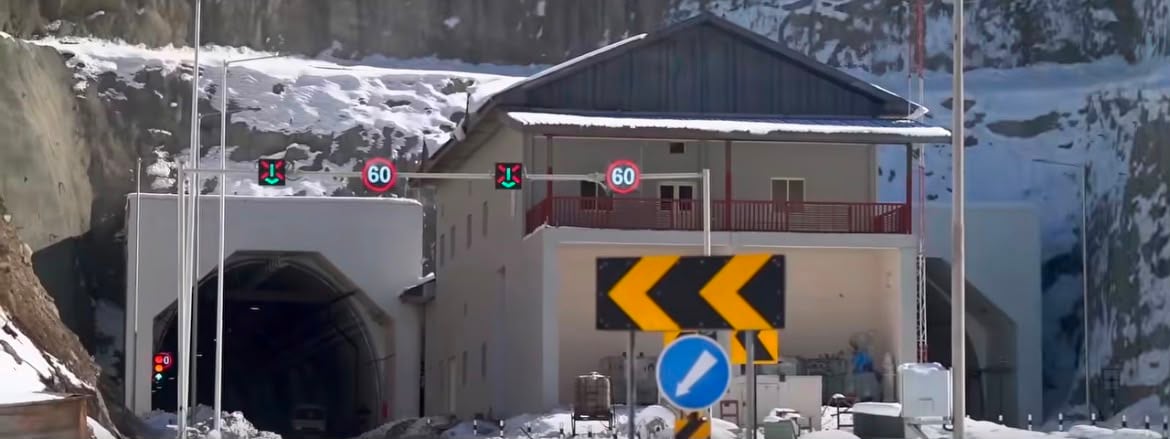
India has reached a landmark moment in its infrastructure journey with the successful breakthrough blast at the Zoji-la Tunnel, the world's highest and longest bi-directional single-tube road tunnel.
The engineering milestone marks the completion of one of the most challenging excavation phases, bringing the ambitious project a step closer to providing all-weather connectivity between Kashmir and Ladakh.
The breakthrough was achieved after engineers blasted through the final rock barrier inside the tunnel, linking both ends of the passage for the first time. The accomplishment represents a significant stage in the construction of the strategically vital tunnel, which is expected to transform transportation across the region.
The 31-kilometre project includes an 18-kilometre network of approach roads and bridges, while the main tunnel stretches 13.153 kilometres from Baltal in Kashmir to Minamarg in Ladakh, cutting through the rugged Himalayan terrain.
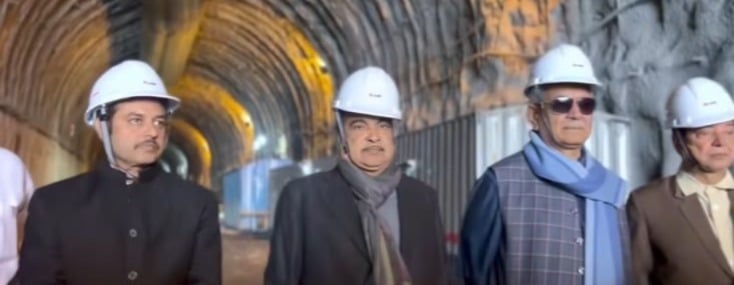
Union Road Transport and Highways Minister Nitin Gadkari witnessed the historic occasion, with officials stating that the tunnel breakthrough has been achieved nearly six months ahead of schedule.
According to project authorities, civil construction work will continue for another seven to eight months before electrical systems and other advanced installations are completed. The tunnel is expected to be opened for public use by January or February 2028.
Constructed at an altitude of 11,578 feet, the horseshoe-shaped tunnel is 9.5 metres wide and 7.57 metres high, featuring a two-lane roadway. Once operational, it will reduce travel time across the Zoji-la Pass from over an hour to just 15 minutes while ensuring year-round connectivity on the Srinagar-Leh National Highway, a route that currently remains closed for several months each year due to heavy snowfall.
Built by Megha Engineering & Infrastructure Limited using the New Austrian Tunnelling Method (NATM), the tunnel is equipped with modern safety and operational features, including a semi-transverse ventilation system, CCTV surveillance, radio communication, uninterrupted power supply, and a smart SCADA tunnel management system.
Officials have described the project as one of India's greatest engineering achievements, expected to significantly strengthen both civilian transportation and strategic mobility in the Himalayan region.