Punjab Newsline | Jind
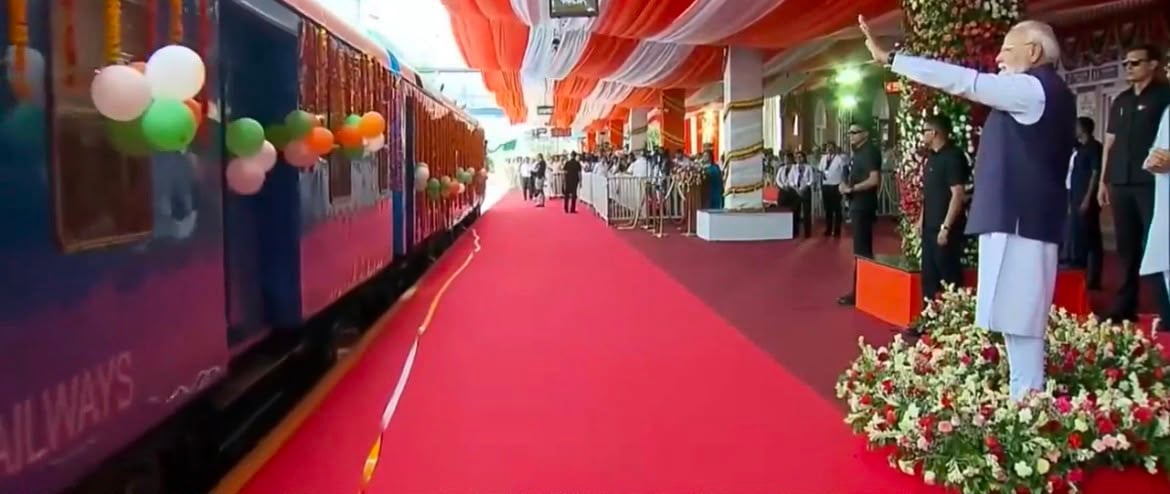
Prime Minister Narendra Modi on Friday flagged off India's first indigenous hydrogen-powered train from Jind Railway Junction, marking a major milestone in the country's push towards clean and sustainable transportation.
The 10-coach hydrogen-powered train will operate on the 89-kilometre Jind–Sonipat route, covering 14 stations at a maximum speed of 75 kmph. The journey is expected to take around two hours, with passenger fares ranging from ₹5 to ₹25.
With the launch, India becomes the fifth country in the world to operate hydrogen-powered trains, joining Germany, France, Sweden, and China.

Eco-Friendly Technology with Zero Emissions
Rajesh Kumar, a passenger loco pilot posted at the Jind headquarters, has been entrusted with operating India's first hydrogen-powered train. He described the train as a major technological advancement over conventional rail systems.
According to Kumar, the train delivers higher power, offers a soundproof and quieter ride, and produces zero pollution, making it an environmentally friendly alternative. He added that the train also has superior acceleration, ensuring smoother and more efficient operations.
How the Hydrogen Fuel Cell Works
Explaining the technology, Kumar said the train is equipped with a hydrogen fuel cell, where hydrogen gas is supplied under pressure while oxygen enters from the opposite side. A chemical reaction between the two generates electricity, water, and water vapour.
The electricity powers the train, water vapour is released into the atmosphere, and water is discharged safely, making the train a zero-emission transport system with no harmful exhaust emissions.
Passenger Communication System
Kumar also explained that loco pilots do not interact directly with passengers. If assistance is required, the loco pilot contacts the train manager, who then informs passengers through the public address system and coordinates the necessary support.