Punjab Newsline | New Delhi
The National Family Health Survey 2023-24 (NFHS-6), released on Friday, has highlighted significant improvements in several social and health indicators across India, while also flagging growing concerns over obesity among women and persistent intimate partner violence.
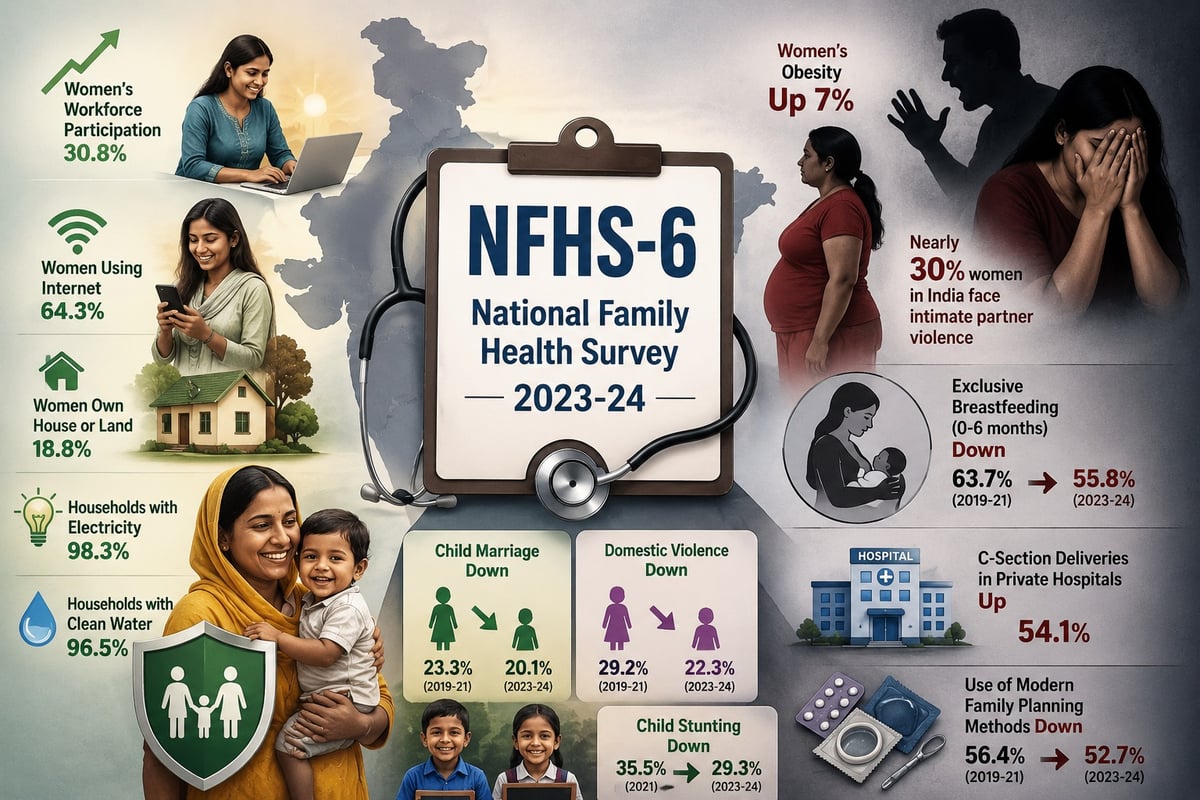
According to the survey, obesity among women has risen by 7 percentage points compared to the previous NFHS-5 survey conducted during 2019-21. The report comes amid global concerns over lifestyle-related health issues and changing dietary patterns.
A separate report by the World Health Organization (WHO) cited in the findings revealed that nearly 30% of women in India have experienced intimate partner violence, including mental, economic, or sexual abuse by their husbands or partners. Among women aged 15-49 years, nearly one in five reported facing such violence.
Despite these concerns, India has recorded notable progress in reducing domestic violence. The prevalence of domestic violence declined from 29.2% to 22.3%, while the rate of child marriage dropped from 23.3% to 20.1%.
Women’s participation in the workforce also improved, rising to 30.8% from 25.4% in the previous survey. Internet usage among women doubled, reaching 64.3%, reflecting growing digital access and connectivity.
The survey showed a significant increase in women’s ownership of property. Around 18.8% of households now have women owning a house or land, up from 14% in 2021. Ownership stands at 18.2% in urban areas and 19.1% in rural regions.
In healthcare, access to basic amenities continued to improve, with 98.3% of households now having electricity and 96.5% having access to clean drinking water.
However, concerns remain over maternal and child health indicators. Exclusive breastfeeding during the first six months declined from 63.7% to 55.8%, while caesarean deliveries in private hospitals reached a record 54.1%.
The report also noted encouraging progress in tackling child malnutrition. The prevalence of stunting among children fell from 35.5% in 2021 to 29.3%, marking a substantial improvement. Nevertheless, only 15.3% of children aged six months to two years receive an adequate and balanced diet, indicating that a large majority still lack proper nutrition.
The use of modern family planning methods, including contraceptive pills, condoms, and sterilisation, declined from 56.4% to 52.7%, raising concerns among public health experts.
State-wise data showed Kerala as the safest state in terms of child marriage, with a prevalence of just 2.9%, while West Bengal (36.4%) and Bihar (34.6%) reported the highest rates. In cases of marital violence, Himachal Pradesh recorded the lowest prevalence at 4.3%, whereas Bihar reported the highest at 36.1%.
Obesity among women was found to be most prevalent in Andhra Pradesh and Sikkim (48% each), followed by Kerala (46.7%). Meghalaya (13.8%) and Jharkhand (16.9%) reported the lowest obesity rates among women.
The NFHS-6 findings present a mixed picture of India’s social and health landscape, reflecting progress in several key development indicators while underscoring the need for sustained efforts to address gender-based violence, nutrition challenges, and lifestyle-related health risks.